
Short answer: Set your ad budget from two numbers, not a percentage you read online: what a new customer is worth to you, and how many leads your team can handle well. Spend where buyers are already looking first, test small, judge by booked calls and sales, and only raise the budget as fast as your follow-up keeps up.
Most businesses don’t have a budget problem. They have a split problem and a capacity problem. Money goes to whatever got the most clicks last month, and when spend goes up, the leads arrive faster than the team can call them back. This guide covers how much to spend, where to put it, what to test first, and how to tell when it’s safe to scale.
1. How much to spend: work backwards from a customer
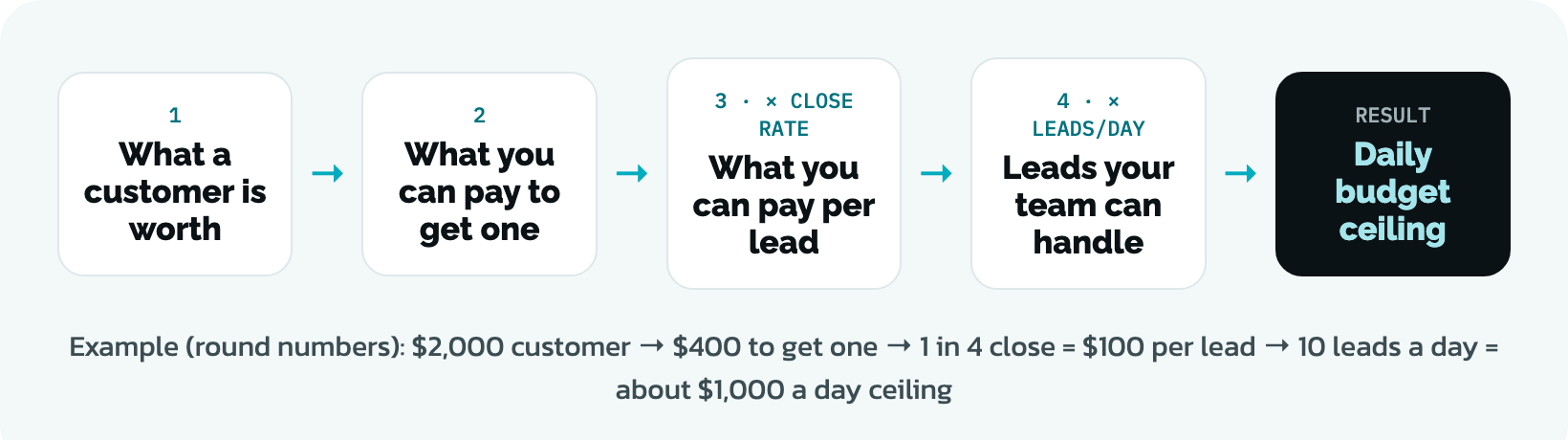
Start with what one new customer is worth, then work back to a daily budget.
- What is a customer worth? Average sale, plus repeat business if you get it.
- What can you afford to pay to get one? The part of that value you’re willing to spend on marketing and still make the profit you want.
- What’s your close rate? Out of 10 qualified leads, how many buy?
- What can you afford per lead? What you can pay per customer × your close rate.
- How many leads can your team handle a day? Not on a good day: every day, with fast replies and real follow-up.
Your starting budget is roughly leads your team can handle × what you can afford per lead. If that number is more than you’re comfortable with, start lower. Never start higher.
Example (round numbers, not a client): a customer is worth $2,000 and you’re happy to spend $400 to get one. You close 1 in 4 qualified leads, so you can pay up to $100 per lead. Your team can work 10 new leads a day properly. That’s a ceiling of about $1,000 a day. Start well under it, prove the cost per lead, then climb.
2. Where to put it: buyers who are already looking come first
Split the budget by how ready people are to buy:
- People already searching for what you do (“dog trainer near me”, “AC repair Tampa”). Search ads and local SEO catch demand that already exists. This is usually the first dollar.
- People who already know you: past visitors, past leads, past customers. Retargeting and follow-up cost little and convert well.
- People who don’t know you yet. Social ads (Facebook, Instagram, TikTok) create new demand. They’re the biggest lever once the first two are working.
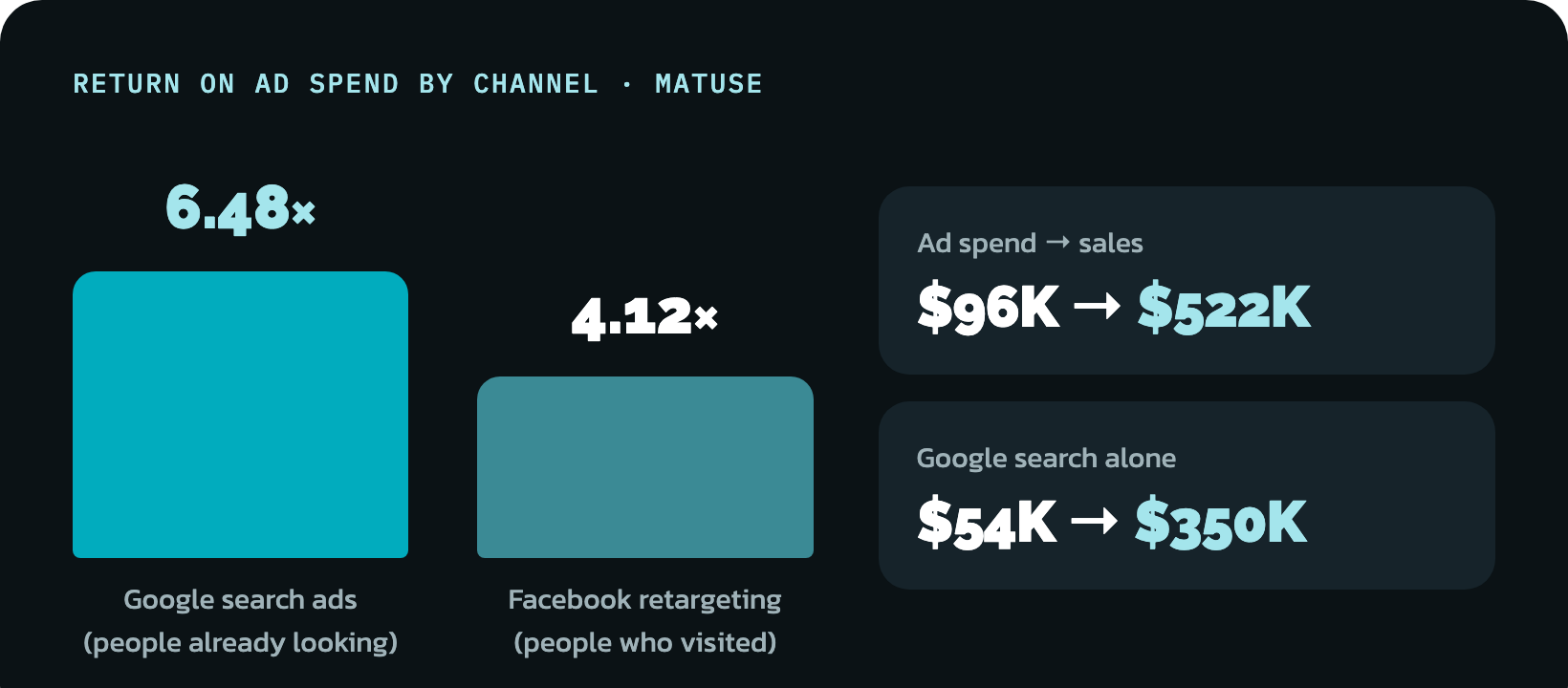
Matuse, an online wetsuit brand, is a good picture of the split. Google search ads aimed at buyer-intent keywords returned 6.48× their spend, and Facebook retargeting for people who visited but didn’t buy returned 4.12×. Together: $522K in sales from $96K in ad spend.
3. What to test first
Test small, with money you’re fine losing, and judge the test by the right number.
- Test the offer and the audience before the budget. A clear offer at a small budget tells you more than a vague one at a big budget.
- Judge by booked calls and sales, not clicks or likes. Cheap clicks that never book are the most expensive thing you can buy.
- Track every lead to a sale. If you can’t see which campaign brought in the customers who paid, you’re splitting the budget blind. (See our guide on marketing attribution.)
- Keep what sells, cut what doesn’t, then move that money to the winners.
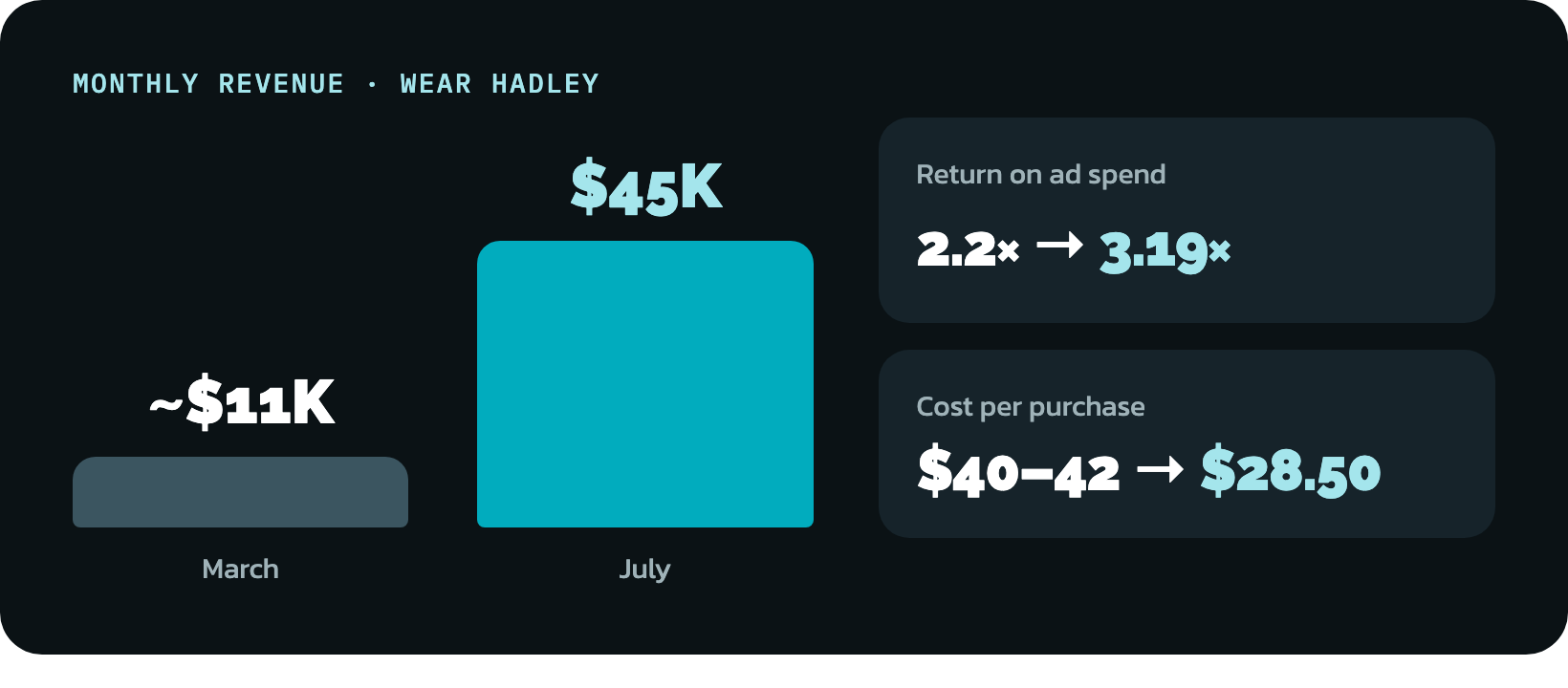
Wear Hadley, a Largo leather-goods brand, did exactly this: segmented audiences, a tuned product feed, retargeting, then more budget on what worked. Monthly sales went from about $11K in March to $45K in July, return on ad spend rose from 2.2× to 3.19×, and cost per purchase fell from $40–42 to $28.50.
4. When it’s safe to scale
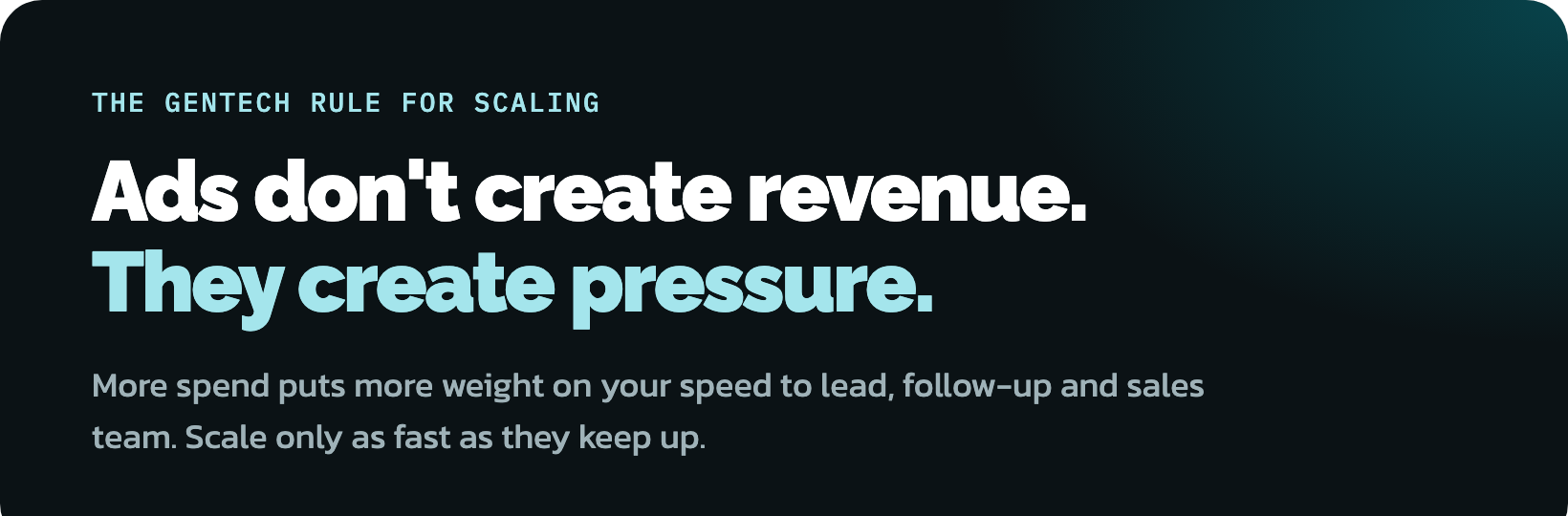
Here’s the part most budget advice skips: doubling your ad spend rarely doubles your revenue. More spend doesn’t buy more sales. It puts more weight on your speed to lead, your follow-up, and your sales team, and the weakest one breaks first.
Before you raise the budget, know three numbers:
- How fast is every lead contacted? Every time, not on a good day. A lead called back in the first minute is warm. The same lead an hour later has moved on. What looks like “lead quality dropped” is usually “response time dropped”.
- How consistent is your follow-up? Calls, texts and emails in a set order over several days, done by a system, not by memory.
- How many leads can your team work well? If one person can handle 10 real conversations a day and you have three, that’s 30 a day. Paying for 60 doesn’t double sales. It overloads the team, and calls get rushed and follow-ups skipped.
If those three hold, raise the budget in steps and watch cost per sale after each one. If they don’t, fix them first. Automate the first reply, systemize follow-up, filter low-intent leads earlier, or add capacity, then scale.
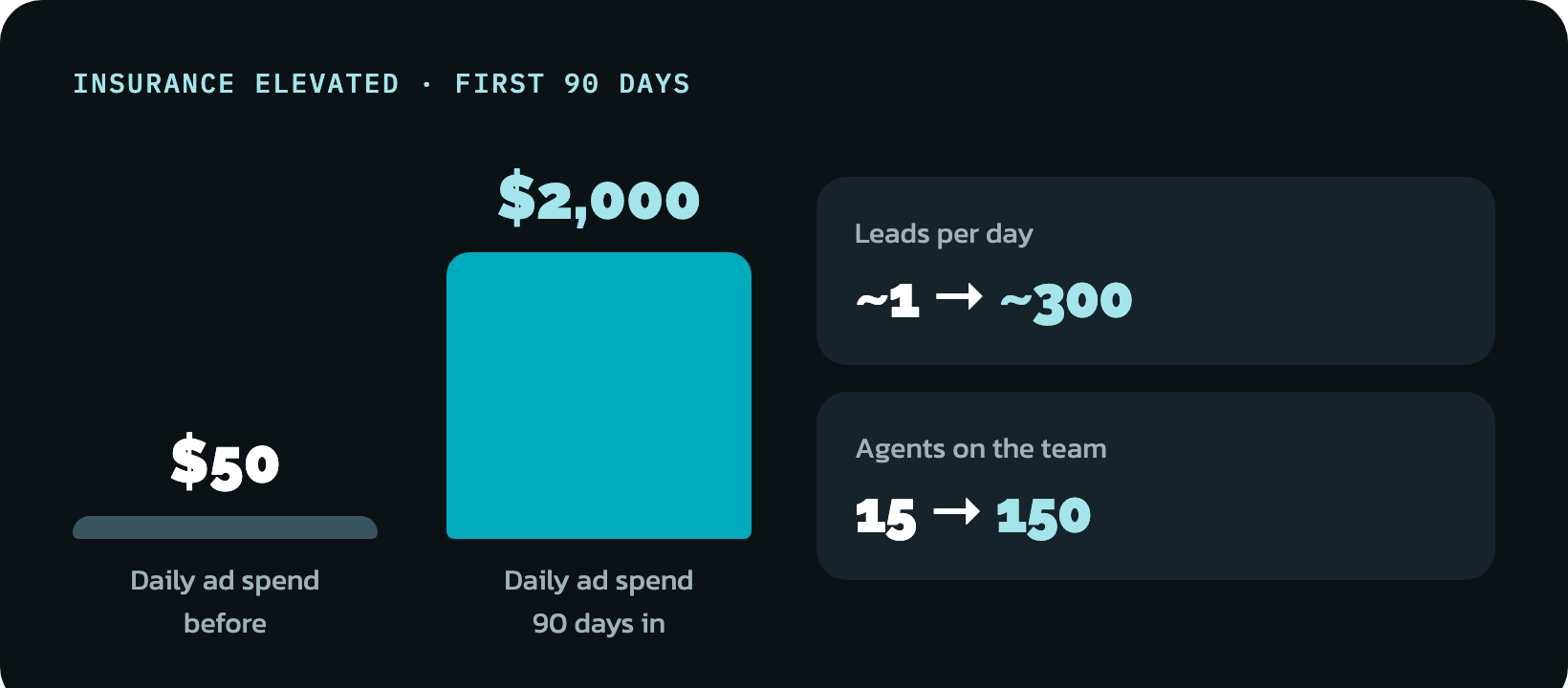
Insurance Elevated is the clearest example we have. They were stuck at $50 a day, because every push for more volume hurt lead quality. With a funnel and email and SMS follow-up built so every lead was worked fast, spend went up step by step, only as fast as lead quality held. 90 days later they were spending $2,000 a day profitably, at about 300 leads a day, and grew from 15 to 150 agents.
5. Signs you’re scaling too fast
- Cost per lead goes up and booking rate goes down at the same time.
- Leads say they “don’t remember signing up”. That means they waited too long for a reply.
- Your team is behind on callbacks, and notes stop getting logged in the CRM.
- Results only look good when you personally call the leads.
- You keep changing ads and audiences, and nothing improves.
When this happens, don’t push the budget harder, and don’t switch the ads off. Pull spend back to what your team can handle, fix the slowest step, then scale again. Treat your ad spend as a diagnostic tool: every dip tells you which part of the business to fix next.
Frequently asked questions
How much should a small business spend on advertising?
Work it out from what a customer is worth, what you can afford to pay per lead, and how many leads your team can handle well each day. Start below that number, prove your cost per lead and cost per sale, then raise it in steps.
Should I spend more on Google or on Facebook?
Start where buyers are already looking (search and local SEO), keep retargeting running for people who already know you, then use social ads to reach new people. The right split depends on your business, which is why you test small and move money to what books.
Why did my cost per lead go up when I raised my budget?
Usually because the business couldn’t keep up, not because the ads broke. Leads waited longer for a reply, follow-up slipped, and fewer booked. Check your response time and team capacity before you change the ads.
How do I know it’s safe to increase my ad budget?
When every lead is contacted fast, follow-up runs on a system, and your team has room for more conversations. Then raise spend in steps and watch cost per sale after each step.
Can you look at our budget and tell us where it’s leaking?
Yes. In a free live audit, a senior strategist walks through your real ad accounts and follow-up with you and shows the first three fixes.
 Nov 24, 2026How home improvement companies scale lead volume without killing lead quality
 Oct 23, 2026The Attribution Modeling Operator Playbook for CMOs
 Oct 22, 2026The attribution modeling playbook in high spend accounts