

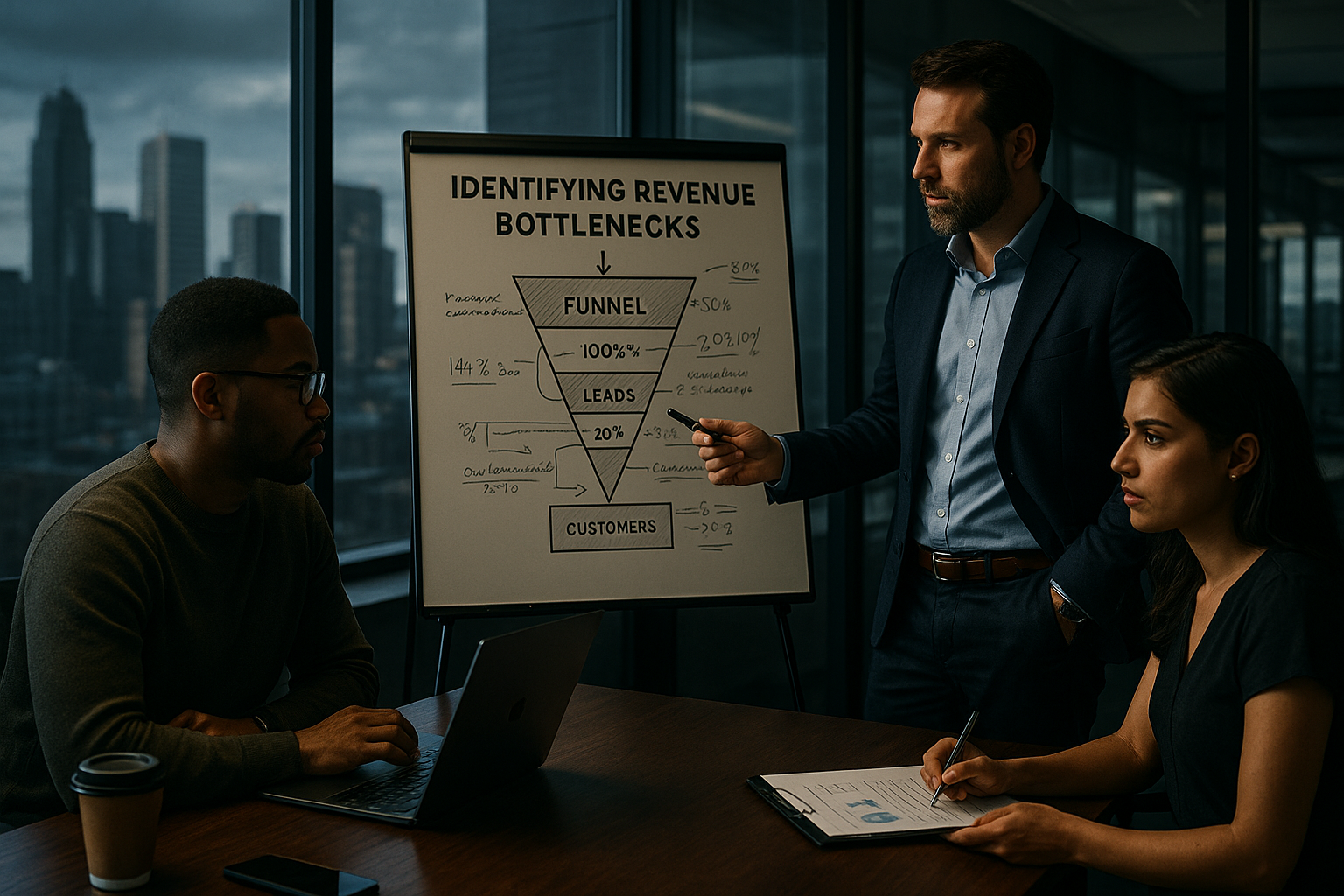
What if the only thing standing between your pipeline velocity and next-stage enterprise growth is an invisible blockage you haven’t yet identified? With the pace of digital transformation accelerating, Identifying Revenue Bottlenecks in Funnel Conversion Optimization has become a nonnegotiable exercise for scaled businesses. Today, pinpointing the true constraint limiting pipeline velocity is not merely an operational necessity—it’s a competitive differentiator in a landscape where minor inefficiencies can have compounding effects. Businesses routinely invest substantial resources in top-of-funnel activities, yet a single bottleneck deep in the sales process can quietly erode ROI and drag down overall growth efficiency, making it imperative to uncover these hidden breaks before they metastasize into systemic revenue loss.
Few statistics illustrate this issue as starkly as the fact that even a 1% improvement in conversion rate can deliver substantial economic returns as organizations scale (forbes.com). Unfortunately, research shows that only 22% of businesses are satisfied with their conversion rates, indicating widespread unaddressed issues in funnel performance (hubspot.com). As we advance into 2025, with increasing complexity in channel mix, customer journey mapping, and attribution, the inability to methodically identify and resolve revenue bottlenecks threatens not only growth but long-term enterprise resilience. No amount of increased top-of-funnel activity can make up for missed revenue opportunities buried further down the journey, especially when those leaks go undiagnosed.
Identifying revenue bottlenecks in funnel conversion optimization demands operational rigor and an analytical lens beyond what most standard reporting surfaces. You need to root out subtle friction points, process gaps, or behavioral disconnects undermining velocity. According to industry insights, mapping and diagnosing the customer journey at granularity—across both digital and offline touchpoints—has become a foundational practice for conversion-centric organizations seeking sustained margin expansion (gartner.com). This enterprise-level attention to bottleneck analysis is quickly defining growth leaders for the next phase of the market cycle.
This article takes a boardroom-to-operator approach, tailored to founders, CMOs, and revenue leaders in scaled organizations. In the first section, we’ll dissect the anatomy of revenue bottlenecks within funnel conversion, outlining the operational consequences and critical evaluation frameworks. The second section explores the ripple effects of unresolved bottlenecks on pipeline velocity, sales team morale, and resource allocation, illustrating how hidden friction points cascade across your go-to-market system. Next, we transition into a toolkit of advanced tips and best practices for ongoing bottleneck identification and repair, equipping your team to maintain conversion velocity quarter after quarter. Section four brings the discussion to life through a hypothetical enterprise case, complete with real metrics and a risk-reward lens filtered through current industry benchmarks. Finally, we close with pragmatic next steps and advanced strategies for institutionalizing ongoing funnel optimization—a detailed checklist built to help you lead in 2025 and beyond.
Revenue is a function of your funnel’s weakest point. Uncovering and addressing these friction sources is the discipline separating stagnant operations from those that realize their growth ambitions. Let’s dive into the full operational scope of Identifying Revenue Bottlenecks in Funnel Conversion Optimization and bring clarity, efficiency, and velocity to every stage of your path to the sale.
Table of Contents
ToggleIsolating the Revenue Bottleneck: The Structural Constraint in Funnel Conversion Optimization
No funnel operates at true peak efficiency without regularly surfacing and remediating its most stubborn constraint. In scaled organizations—where marketing teams manage seven-figure budgets and multi-channel orchestration—the challenge isn’t lack of data, but discerning the pivotal bottleneck throttling conversion flow and, by extension, revenue. Let’s examine how to rationally identify and address the bottleneck impeding your pipeline velocity, drawing on advanced funnel analytics, process diagnostics, and conversion metrics.
The concept of revenue bottlenecks centers on the principle that your funnel’s throughput is only as fast as its slowest step. Often, organizations focus heavily on top-of-funnel acquisition, assuming that more leads equal more sales. However, with only 22% of businesses satisfied with their current conversion rates, it’s clear that breakpoints further down the funnel are stealthily restricting growth (hubspot.com). The goal is to methodically determine which stage in your buyer journey tightens flow, then mobilize resources to resolve it.
Consider an enterprise SaaS company running $8M in annual paid media, with a marketing and sales org of 50. Campaigns drive significant inbound opportunities, but quarter-over-quarter pipeline velocity lags forecast despite apparent demand. A deep-dive conversion analysis pinpoints a sharp drop between MQL-to-SQL transition—where less than 18% of marketing-qualified leads convert to sales meetings, versus an industry norm of 28% (forbes.com). Leadership has visibility into volume but not the efficiency gap, as surface-level reporting masks the choke in sales handoff process and lead qualification.
The hidden bottleneck is revealed through a blend of quantitative and qualitative diagnostics. Funnel analytics show MQL growth is steady, but the SQL stage stalls with slow SLA adherence and missed touchpoints. Interviews with the sales team uncover confusion around lead scoring logic and variability in follow-up cadence. These micro-inefficiencies compound: the lag at the MQL-to-SQL bridge starves downstream opportunity creation, inflates the sales cycle, and creates constant tension between marketing and sales. This single break drives down overall revenue velocity, even though top-line pipeline appears healthy.
Addressing the revenue bottleneck demands three critical moves: First, align cross-functional teams on the specific conversion goal for the at-risk stage. Second, standardize process—refining lead scoring models and codifying follow-up SLA. Third, deploy targeted enablement like templated outreach, auto-routing, and real-time reporting dashboards. These interventions collectively raise the MQL-to-SQL rate, restoring pipeline flow and unlocking incremental revenue without additional acquisition spend. In this scenario, every 1% increase in conversion brings significant gains as overall pipeline output rises (forbes.com).
It is essential to institutionalize continuous bottleneck identification. Funnel performance varies by business model, seasonality, and product-market fit. Static solutions quickly lose efficacy; what was optimized last quarter may emerge as a new constraint as team, spend, or tactics scale. Systematic review—combining advanced funnel metrics, behavioral journey mapping, and cross-functional feedback—ensures fresh constraints are surfaced before inefficiency calcifies. According to Gartner, organizations that perform structured journey analysis and apply iterative optimization frameworks consistently outperform peers on revenue growth (gartner.com).
In sum, funnel conversion optimization in scaled businesses requires boardroom clarity on where friction accumulates. The true revenue bottleneck is rarely the most obvious leak. By isolating, quantifying, and remediating this constraint, enterprises can accelerate pipeline velocity, align teams, and reclaim conversion efficiency as a source of durable advantage.
The Ripple Effect: How Funnel Bottlenecks Undermine Pipeline Velocity and Sales Team Performance
The existence of a revenue bottleneck doesn’t just impact conversion rates—it sets off systemic consequences that reach far beyond a single stage in the funnel. Hidden inefficiencies degrade not only revenue flow but also organizational energy, operational focus, and resource alignment. When a critical constraint remains unidentified, its negative impact proliferates throughout the commercial organization, stalling deal progress and sapping morale.
- Pipeline Congestion and Forecast Misses: Bottlenecks at MQL-to-SQL, SQL-to-Opportunity, or contract stages can stall deals for weeks, slowing time-to-close and often leading to revenue forecast shortfalls, as median B2B sales cycles have grown 22% over the last five years (forbes.com).
- Resource Misallocation: Marketers and SDRs may focus energy on acquisition or manual intervention, when, in actuality, a systematic process fix at the bottleneck would drive more pipeline conversion. This reduces ROI on both human capital and marketing spend.
- Sales and Marketing Alignment Breakdown: Unresolved bottlenecks strain interdepartmental relationships, as finger-pointing over \”lead quality\” or attribution distracts from solving the root cause.
- Missed Customer Experience Opportunities: As today’s buying journey involves more touches and decision-makers (average 6–10 stakeholders per B2B deal, according to gartner.com), any process friction delays outcomes and may erode trust or brand perception—especially among enterprise buyers expecting seamless, responsive engagement.
Pipeline velocity, the heartbeat of revenue operations, depends on every handoff and process intersection performing at a high standard. A single, unaddressed bottleneck can cascade downstream, causing sales cycles to drag and opportunity conversion rates to dip well below industry averages. This ultimately impacts both present-day revenue and future book of business, as stalled deals often become lost deals.
At scale, these inefficiencies multiply. In organizations with complex service lines or multinational footprints, hidden conversion bottlenecks can go undetected for quarters, costing millions annually. The only true solution is systematic, end-to-end process visibility and discipline in remediation. Robust internal communication and data transparency—coupled with periodic journey mapping—are required so teams can see, measure, and resolve upstream constraints rapidly.
To support this transformation, external expertise can be a lever. Consulting partners specializing in funnel optimization bring diagnostic frameworks and change management capabilities needed to accelerate outcomes. For instance, leveraging frameworks from gentechmarketing.com can facilitate audit-driven clarity, unbiased KPI prioritization, and cross-team workflow alignment during critical optimization initiatives.
With modern buyers researching, comparing, and often ghosting vendors mid-funnel, funnel conversion optimization is not a “set and forget” discipline—it’s an operating requirement. To protect revenue velocity and workforce morale going forward, operators should memorialize bottleneck resurfacing as a standing agenda item, with clear accountability and signal-response playbooks. By embedding this focus into quarterly business reviews, scaled organizations not only unlock pipeline velocity but also future-proof their competitive position as customer journeys and buyer behaviors continue to evolve.
Advanced Tips and Best Practices for Ongoing Funnel Bottleneck Identification
Sustaining funnel velocity in fast-moving markets requires more than fixing visible bottlenecks—it demands cultural and operational buy-in for ongoing optimization. Leaders who excel in identifying revenue bottlenecks in funnel conversion optimization make continuous improvement an ingrained practice, leveraging leading-edge methodologies that surface friction early and often. Here’s a collection of advanced tips and best practices to keep your revenue engine tuned and competitive, above and beyond foundational process fixes.
Implement Real-Time Journey Analytics
Real-time analytics tools are critical for surfacing customer behavior patterns that static reports miss. By integrating session replay, heatmapping, and digital event tracking, enterprise operators can pinpoint micro-conversions and abandonment points at every funnel stage. This level of granularity exposes sudden spikes in friction, allowing interventions before issues become entrenched. According to gartner.com, organizations with advanced journey mapping and real-time analytics outpace peers on conversion gains by capturing issues in-flight, not in post-mortem reviews.
Institutionalize Cross-Functional Funnel Reviews
Top organizations schedule recurring cross-functional reviews—bringing together sales, marketing, CX, and product stakeholders to dissect current funnel performance. These sessions break down reporting silos and surface chain-reaction effects not visible in isolated dashboards. Funnel reviews should focus on each conversion stage, asking which specific metrics or handoffs underperform benchmarks and why. Embedding this discipline into the operating rhythm ensures that bottleneck identification becomes a predictable, team-wide priority.
Deploy Predictive Conversion Modeling
Predictive analytics, powered by your CRM and data warehouse, allows you to proactively flag at-risk stages by forecasting likely drop-offs or conversion shortfalls. Machine learning models learn from historical patterns—identifying leading indicators of friction, such as longer dwell time between touches or reduced engagement in key segments. This advanced visibility lets you act before KPI misses snowball, asserting control over pipeline velocity and revenue quality.
Invest in Funnel-Oriented Sales Enablement
Standardizing sales enablement around the specific behaviors needed to overcome today’s bottlenecks amplifies conversion lift. Examples include stage-specific objection handling templates, dynamic content delivery tailored to buyer personas, and automated meeting scheduling at conversion handoffs. Enablement resources built in partnership with frontline teams ensure process adoption while closing the gap between marketing intent and sales execution. For guidance on designing high-impact enablement systems, see the frameworks at gentechmarketing.com.
Prioritize Continuous Feedback Loops
Ongoing funnel optimization only works if feedback from both customers and internal teams is captured systematically. Implement win/loss interviews, buyer pulse surveys, and frontline rep debriefs at key junctures in the buyer journey. These qualitative insights contextualize the quantitative data, validating which frictions matter most and how process adjustments affect live deal flow. Embedding a healthy feedback cadence ensures your bottleneck identification and resolution remain grounded in real-world experience, not just dashboard KPIs.
By weaving these methods into your go-to-market organization, you’ll foster a proactive culture where no bottleneck stays hidden for long. These best practices are how high-performing enterprises consistently refine their funnel, protect pipeline velocity, and extract maximum value from every stage of the customer journey.
Enterprise Hypothetical: Diagnosing Bottleneck Risk in a $30M Pipeline
Business leaders often underestimate the potential for small inefficiencies to paralyze otherwise high-performing revenue operations. Let’s explore a synthetic—but representative—scenario set inside a $30M ARR B2B technology company managing hundreds of inbound opportunities monthly. The organization has invested heavily in paid search, ABM, and advanced lead nurturing initiatives, yet conversion from opportunity to closed-won lags 18% below plan despite robust funnel volume. This scenario highlights the operational and financial risks of unresolved bottlenecks as organizations scale.
- Sudden Increase in Top-of-Funnel Volume: Launching a new paid campaign delivers a 30% spike in high-intent leads into the CRM, suggesting imminent pipeline expansion. However, existing systems aren’t calibrated for this influx, and mid-funnel handoff delays intensify.
- Diagnostic Metrics Reveal the Choke Point: While MQL-to-SQL conversion remains steady, the opportunity-to-demo stage falls off, with only 14% conversion (versus the industry mean of ~22%, indicating substantial underperformance) (forbes.com).
- Qualitative Feedback Surfaces Process Gaps: Sales reps report unclear demo scheduling ownership and inconsistent proposal follow-up, leading to “ghosted” opportunities and delayed revenue realization.
- Cost of Delay Quantified: Each stalled deal represents a six-figure book of business, and analysis reveals a 22% lengthening of cycle time year-over-year—a statistic mirrored broadly in the industry (forbes.com).
This fictional case demonstrates how even healthy top-of-funnel activity cannot offset a process constraint lodged further down the buying journey. As sales cycles expand, not only is revenue recognition delayed, but CAC increases as net available pipeline requires higher spend per closed deal. These effects compound over fiscal quarters, eroding forecasting reliability and challenging both boardroom and investor confidence.
The key learning: bottlenecks often emerge not from insufficient lead generation, but from gaps in internal handoff, process definition, or system automation. In today’s multi-touch, multi-stakeholder enterprise deals (with the average B2B purchase involving 6–10 decision-makers, per gartner.com), failure to optimize every transition point means outlier losses become a systemic drag. Routine, hyper-granular funnel analysis anchored in real-time metrics and rep feedback is essential. Without it, organizations risk prolonged stagnation despite ambitious spend and headcount growth.
Bottleneck diagnosis and repair are never “one and done.” Advanced operators build workflows for continuous monitoring, with flagged metric thresholds and playbooks for immediate response. This is how tomorrow’s market leaders institutionalize agile revenue operations—rapidly identifying emerging friction and mobilizing solutions to keep opportunity flow unimpeded.
Next Steps and Advanced Strategies for Funnel Optimization in 2025
With the pace of market change and buyer expectation escalation, sustaining funnel efficiency requires a multi-dimensional approach. Below is a sophisticated checklist to guide operators, CMOs, and revenue leaders through advanced strategies for ongoing bottleneck identification and funnel optimization as they look toward 2025 and beyond.
- Codify Funnel Stage Definitions and Ownership
Ambiguity in stage criteria or process responsibility is the root cause of many bottlenecks. Regularly update and document definitions for MQL, SQL, Opportunity, and Closed-Won. Assign clear ownership for every handoff to ensure issues are detected and resolved swiftly. This level of precision prevents the \”gray area\” drop-offs that often escape standard reporting.
- Implement Automated SLA Enforcement
Leverage CRM and workflow automation tools to enforce time-bound follow-up and conversion SLAs at each stage. Automated alerts, escalations, and reporting ensure that opportunities never stagnate in the funnel, and managers can intervene when thresholds are breached. This mitigates human error and keeps pipeline movement fluid, especially during periods of seasonal volume spikes.
- Invest in Integrated Customer Insights Platforms
Break down data silos by implementing customer data platforms (CDPs) or integrated analytics environments. These tools centralize cross-channel data, making it easier to trace lead journeys, segment friction patterns, and run advanced conversion modeling. Such integration underpins sophisticated bottleneck analysis that goes deeper than surface-level KPIs.
- Schedule Quarterly End-to-End Funnel Audits
Institutionalize deep-dive audits of your full funnel each quarter. Analyze each handoff, process, and touchpoint from the lead’s perspective. Bring in external partners, such as gentechmarketing.com, for added rigor and unbiased insights. These audits surface long-shadow issues and keep the team focused on highest-leverage improvement areas.
- Foster a Culture of Experimentation and Iteration
Revenue bottlenecks evolve, especially as organizations grow or pursue new go-to-market motions. Promote hypothesis-driven testing at every funnel stage and empower teams to deploy, measure, and iterate improvements rapidly. Make small-scale experimentation a celebrated part of the culture, ensuring gains are compounded and losses are contained quickly.
- Establish Dynamic Benchmarking and KPI Tracking
Constantly calibrate target conversion rates against changing market, channel, and segment benchmarks. Dynamic dashboards enable your team to visualize drift early, prompting timely inquiry and intervention. This proactive approach prevents small inefficiencies from accumulating into large-scale revenue risks over time.
By acting on these advanced strategies, scaled organizations transform revenue operations from reactive repair to proactive optimization. Bottleneck vigilance and agile process innovation form the backbone of competitive advantage for those aiming to outperform in a rapidly shifting commercial environment.
In sum, identifying and resolving revenue bottlenecks in funnel conversion optimization is both a science and leadership mandate. The companies that succeed are those that institutionalize diagnosis, response, and relentless improvement as core operating principles.
As we have seen, bottlenecks within enterprise funnels yield consequences that extend across revenue velocity, operational focus, and competitive margin. Only 22% of organizations are satisfied with their current conversion rates, illustrating the scale of unrealized opportunity across the marketplace (hubspot.com). Neglecting these friction points leads to cascading inefficiencies—from missed forecasts and resource misallocation to diminished customer experience and higher acquisition costs. Making bottleneck identification a permanent fixture within revenue operations links directly to improved growth efficiency and organizational health (gartner.com).
Operators equipped with advanced analytical tools and multidisciplinary feedback processes will gain an advantage—not just in diagnosing issues, but in creating scalable, agile responses that safeguard pipeline throughput now and in the future. Unlocking the next phase of pipeline velocity requires not just one-time optimization but a mindset of continuous refinement, accountability, and experimentation.
If your organization is ready to operationalize these principles, minimize revenue leakage, and turn conversion optimization into a growth engine, explore custom solutions and strategic advisory at gentechmarketing.com. Now is the time to build the frictionless revenue processes that will fuel your lead-to-cash performance for years to come.